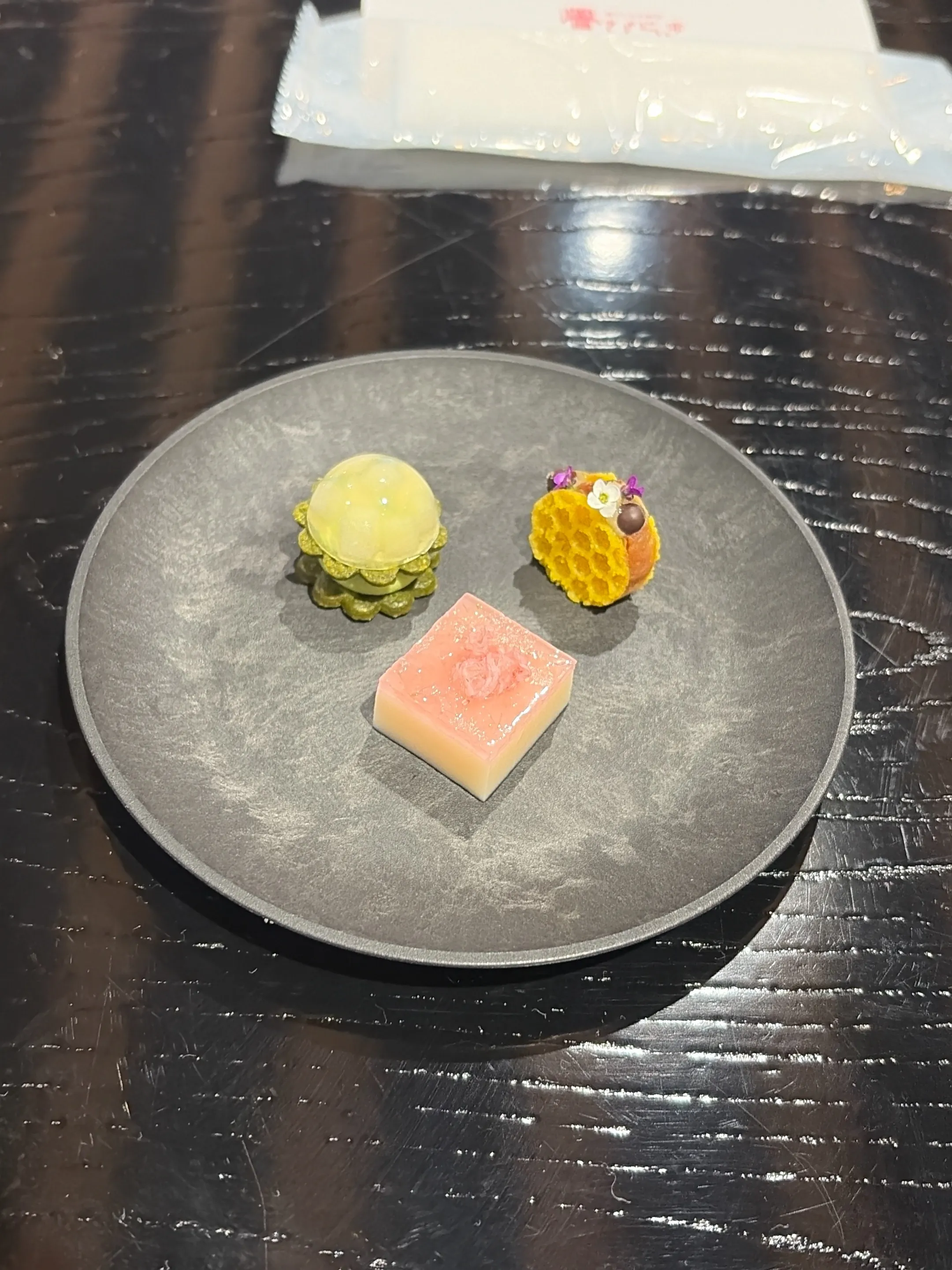
Wagashi 101: The Sweets Served at a Japanese Tea Ceremony
Some links are affiliate links — we may earn a small commission at no extra cost to you.
Quick answer
Wagashi are the traditional sweets served just before matcha at a tea ceremony — their sweetness is timed to balance the tea's bitterness, and their shape, color, and name almost always reference the current season. There are two main types you'll encounter: namagashi (soft, sculpted sweets — the elegant ones you've seen in photos) and higashi (dry, pressed sugar sweets, often used in simpler or seasonal settings).
Why the sweet comes before the tea
This surprises most first-time guests: you eat the wagashi before drinking, not alongside it. The sugar prepares your palate so the tea's bitterness reads as balanced rather than sharp — the two are designed as a pair, not separate courses.
In my own practice, the rule is simple and always the same: the sweet is eaten before the tea, never alongside it, and never bitten into whole. I use the kuromoji pick to cut it into small pieces first — no exceptions, no matter how tempting a whole bite looks.
Namagashi: the sculpted sweets
These are the wagashi people photograph — soft, often made from nerikiri (sweetened white bean paste, shaped and colored by hand) or wrapped around a bean-jam center. What makes them remarkable is how much they say without words: a single sweet is often named after a season, a poem, or a fleeting moment — a persimmon in autumn, a hydrangea in the rainy season, cherry blossoms in spring.
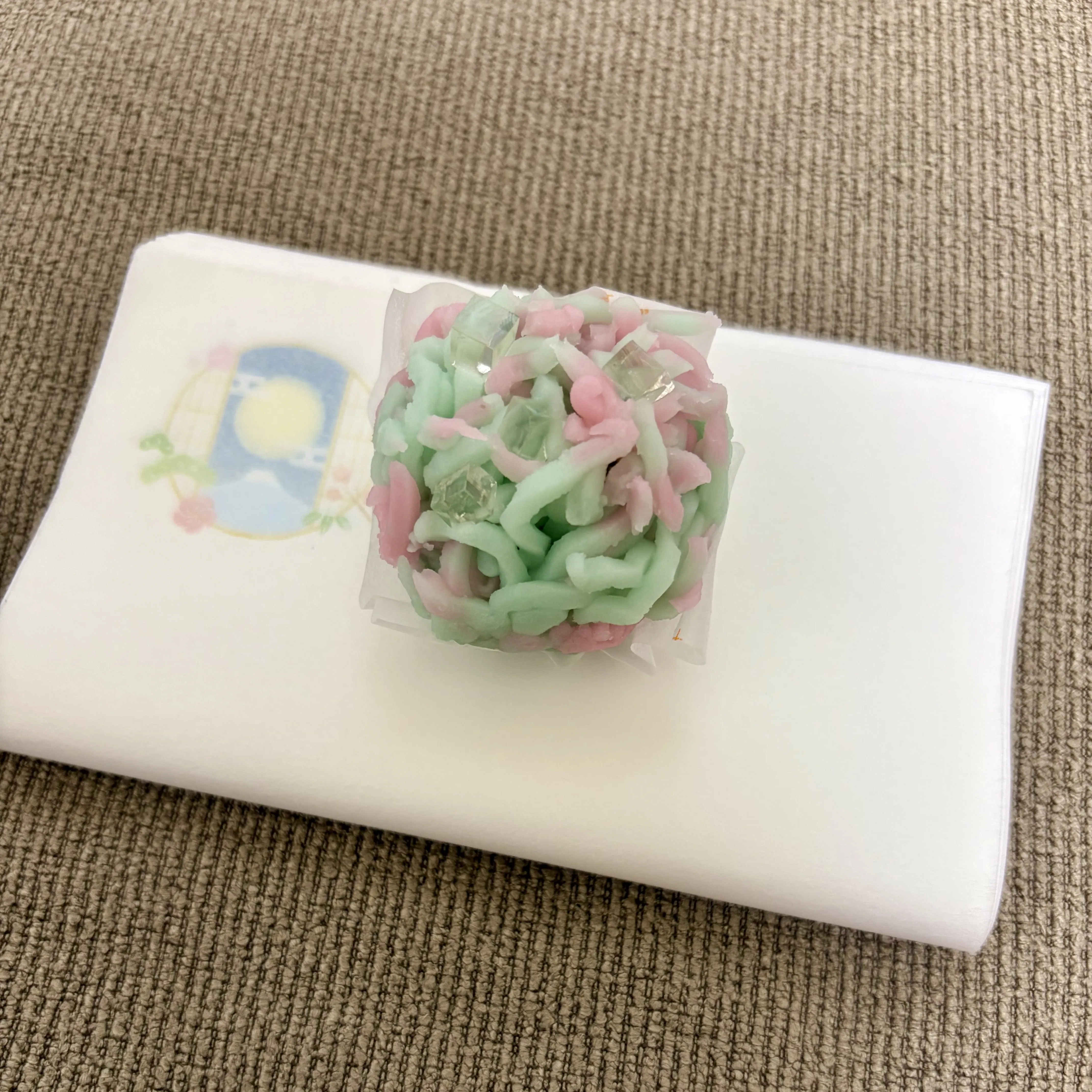
The pink-and-green sweet in the photo above is a chrysanthemum motif — the kind of seasonal detail a host chooses deliberately, often weeks in advance, to match the exact week of your visit.
Etiquette note: don't bite directly into a whole namagashi. Use the small pick (kuromoji) provided to cut it into bite-sized pieces first, eating one piece at a time.
Higashi: the dry sweets
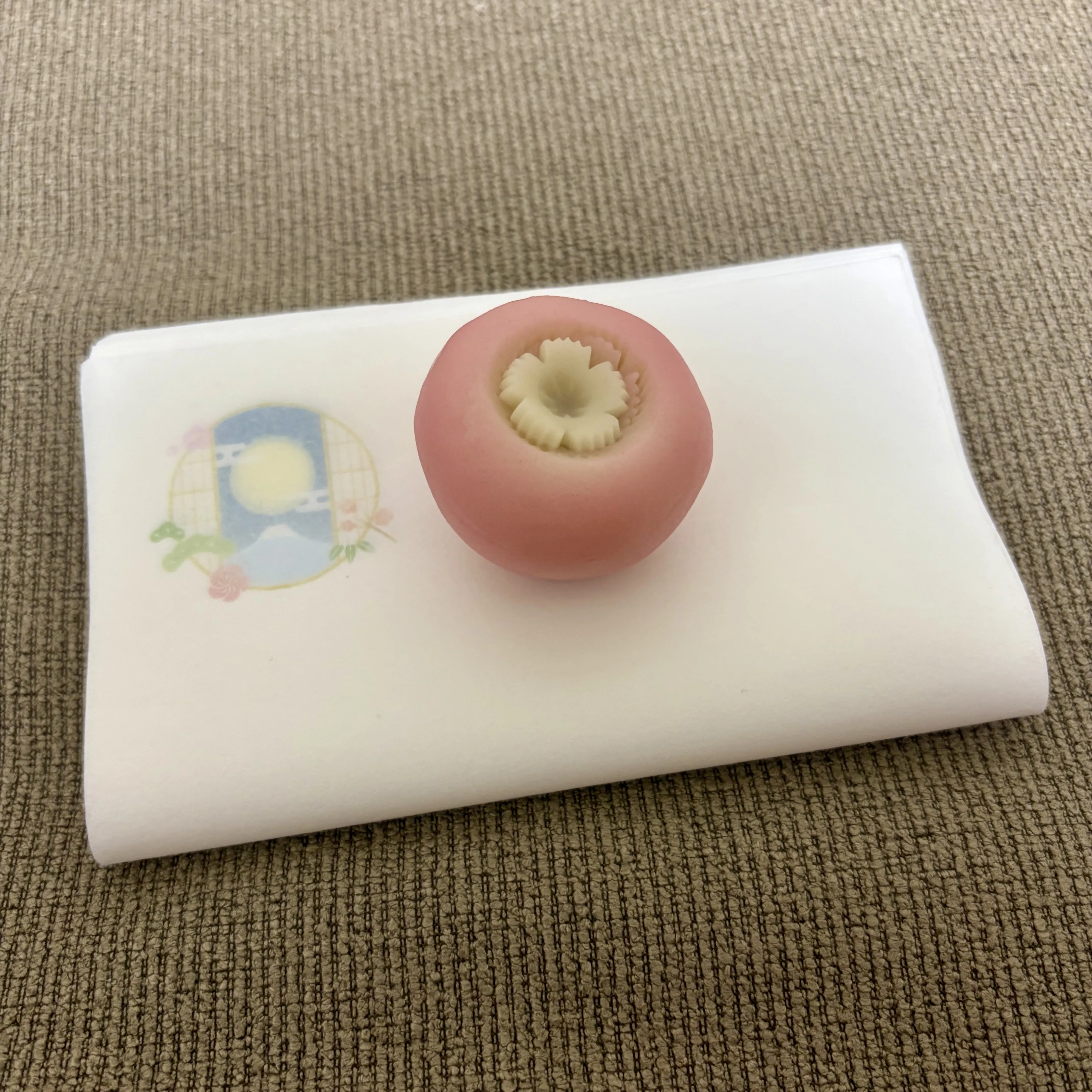
Higashi are pressed sugar or rice-flour sweets — harder, lighter, often stamped with seasonal shapes (a maple leaf, a wave pattern, a New Year motif). They're common in simpler tea gatherings and are traditionally what's served alongside usucha (thin tea) in some settings, though practice varies.
Kōhaku-tō: the jewel-like sweet
The amber, jelly-like sweet you may see on a tea plate — made from agar and sugar, often cut into small glassy blocks — is kōhaku-tō. It isn't a recent trend; it's a long-standing confection with real history. What's changed is visibility: its jewel-like look has made it newly popular on social media, but the sweet itself has been part of the wagashi world for a long time.
What to look for as a guest
- The shape and color usually name the season — ask your host what the sweet represents. It's one of the most welcomed questions you can ask (see our 10 questions before you book guide).
- One sweet, rarely more — wagashi at a ceremony are a small, deliberate pause, not a dessert course.
- The wrapping matters too — many are served on seasonal washi paper, itself part of the presentation.
See which venues include a sweets-making add-on on our comparison table, or read Private vs Group: Which to Book? for venue picks.