What to Wear to a Tea Ceremony in Tokyo
Some links are affiliate links — we may earn a small commission at no extra cost to you.
Quick answer
You don't need a kimono. Wear something modest that you can sit comfortably in — loose trousers are the safest choice — and bring socks, because bare feet on tatami are the one real mistake. Skip strong perfume, and take off rings, watches, and bracelets that could scratch a host's utensils. Nothing else is required, and no venue will turn you away for jeans.
Most guests worry about this far more than they need to. Nobody is inspecting your outfit. But a handful of small choices genuinely affect how comfortable your session is — and two of them protect things that can't be replaced.
The one non-negotiable: socks
Bare feet on tatami are considered inconsiderate. If there's one dress rule to follow, this is it.
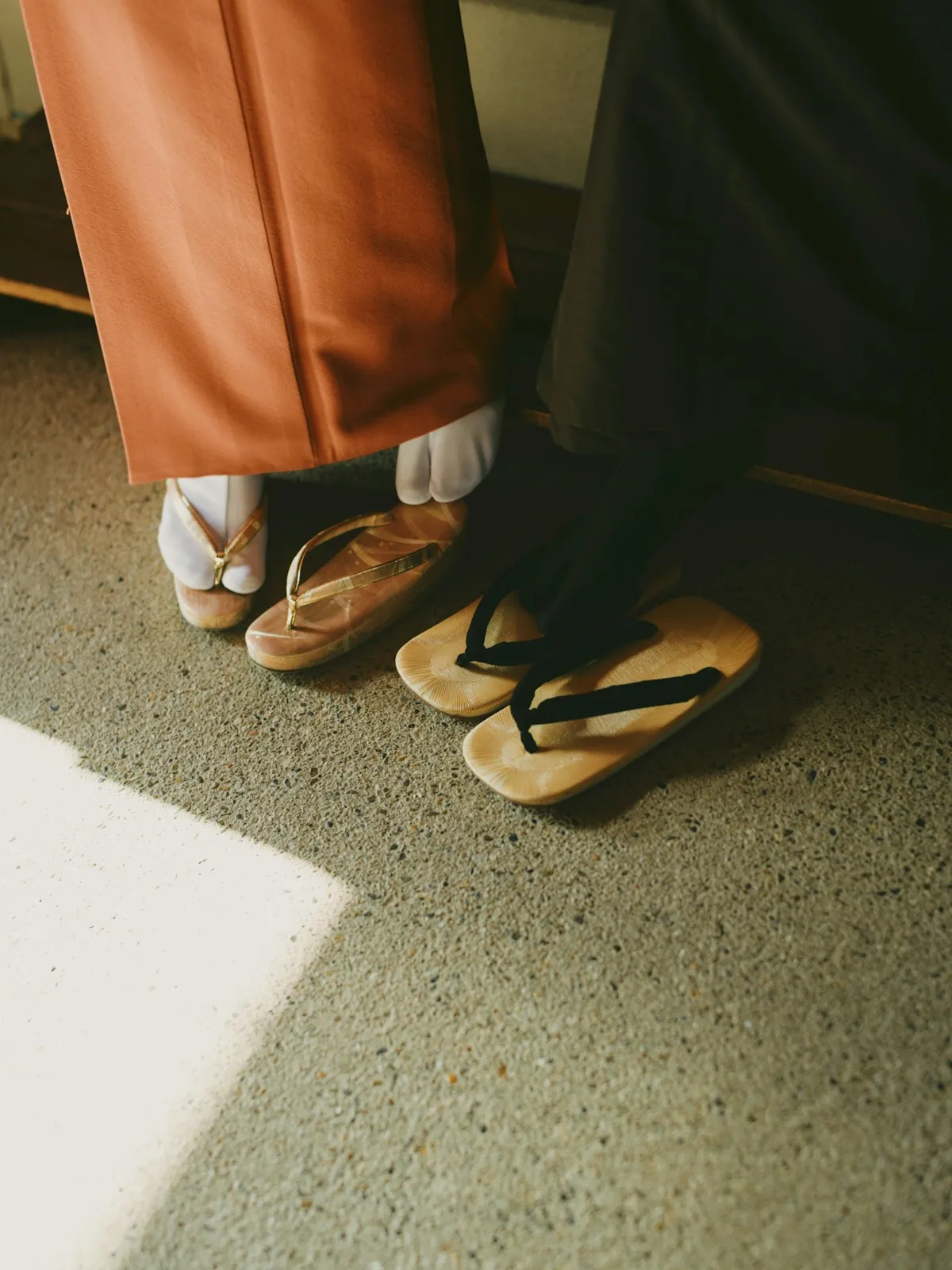
Plain white socks are the classic choice, and here's the practitioner's view: most tourist-facing venues won't enforce this, and nobody will stop you at the door. But turning up in socks — white or otherwise — quietly marks you as someone who knows. Colour matters far less than simply having them on. If you're in sandals, tuck a pair into your bag and put them on before you step onto the mats.
What to actually wear
Bottoms: trousers, loose ones. This is the single most useful thing on this page. Skirts are allowed, but they create problems at both lengths — short ones get awkward the moment you kneel, and long ones can tangle around your legs as you stand up from a kneeling position, which is exactly the moment you don't want to be unsteady. Loose trousers sidestep all of it.
Tops: anything modest. Sleeves that don't drag are practical, since you'll be reaching forward for the bowl and the sweet with both hands.
Layers: tea rooms are often quiet, still spaces without strong air conditioning. In summer, thin layers you can adjust beat one heavy outfit.
Shoes: you'll take them off, so slip-on shoes save you fumbling at the entrance while others wait.
What to take off (or leave behind)
Rings, watches, bracelets. This isn't formality — it's protection. Tea bowls are often handmade, sometimes antique, occasionally irreplaceable, and you'll hold one with both hands. One ring against a 200-year-old bowl is a story nobody wants.
Strong perfume. The tea room is a world of subtle scents: tatami, charcoal, the tea itself. Heavy fragrance doesn't compete with that — it erases it, for everyone in the room.
Long nails, if you can. Same reason as the rings.
Hair: if it's long, tie it up. Bring a hair tie — you'll be leaning forward over bowls and sweets, and you'll be glad you did.
Do you need to wear a kimono?
No. Not one venue in our comparison of 18 Tokyo tea ceremonies requires it, and guests in ordinary clothes are entirely normal.
That said, kimono dressing is offered as an add-on at several venues — around ¥6,300 at Maikoya including hair styling, and as a paid option at Chazen and others. Whether it's worth it depends on what you want out of the day: a kimono makes the photographs, not the tea.
If you do rent one, one practical note: you'll be sitting on the floor and reaching forward, so ask the shop to dress you with that in mind rather than for standing photos alone.
Frequently Asked Questions
- Can I wear jeans to a tea ceremony in Tokyo?
- At a tourist-facing venue, yes — no one will turn you away. One caveat worth taking seriously: tight, restrictive jeans and seiza are a genuinely bad combination. If jeans are what you have, make them your loosest pair.
- Do I have to take my shoes off?
- Yes — every tea room is a shoes-off space, which is exactly why socks matter.
- Is there a dress code for tourists at a Japanese tea ceremony?
- No formal dress code. Modest, comfortable clothing plus clean socks covers it. The unwritten rules are about scent and jewelry, not style.
- Should I wear a kimono to a tea ceremony?
- Optional and never expected. It's a lovely experience in itself, but it's a separate decision from the tea.
See also: 10 questions to ask before you book and our guide for guests who can't sit seiza.