Matcha Grades Explained: What You're Actually Drinking
Some links are affiliate links — we may earn a small commission at no extra cost to you.
Quick answer
Matcha is sold in two broad tiers — ceremonial grade and culinary grade — but there's no government or industry body that regulates either term, so the label on a tin tells you almost nothing on its own. What actually determines quality is shading time before harvest, which leaves are picked, and how finely the tea is stone-ground; vivid green color and a soft, rounded sweetness are the real signals, not the word "ceremonial" printed on the package. At a tourist tea ceremony in Tokyo, you're almost always drinking usucha (thin tea), which uses a good but not top-tier grade — the very highest grades are reserved for koicha (thick tea), a style most first-time visitors never encounter.
There's no official "matcha grading" authority
This is the part that surprises people most: "ceremonial grade" and "culinary grade" are trade terms, not a certified classification like a wine appellation or a coffee cupping score. Any producer can print "ceremonial grade" on a tin of matcha that a tea professional would never actually use in a ceremony. That doesn't mean the terms are meaningless — reputable producers use them consistently within their own line — but it does mean the label alone isn't proof of quality, only a starting signal.
What actually separates a good matcha from a mediocre one
A few factors do the real work, and they compound:
Shading before harvest. The tea plants used for matcha are covered to block sunlight before picking. Less light pushes the plant to produce more chlorophyll and amino acids (particularly L-theanine) and less of the catechins that read as bitterness. Longer, more careful shading generally means a rounder, less astringent tea.
Which leaves are picked. The first harvest of the year (shincha) uses the youngest, most tender leaves and is prized for a smoother taste. Later harvests and older, tougher leaves make a coarser, more bitter tea — this is most of what ends up labeled culinary grade, destined for lattes and baking rather than a bowl on its own.
Stone-grinding. Traditional matcha is ground slowly on granite stone mills, which keeps the powder cool and preserves both color and aroma. Mass-market culinary matcha is often ground faster by machine, which can introduce heat and coarsen the texture — you can sometimes feel this as a grittier mouthfeel rather than the silky texture of a well-made ceremonial matcha.
Storage and freshness. Matcha oxidizes quickly once opened — its color visibly dulls from a bright jade toward a duller olive within weeks of exposure to air, light, and heat. A high-grade matcha stored badly will taste worse than a modest one that's been kept properly, which is one more reason the grade printed on the tin only tells part of the story.
Usucha vs. koicha: the distinction that actually matters for your visit
If you book a tea ceremony experience in Tokyo, the style you're served matters more than any grade label. There are two main preparations:
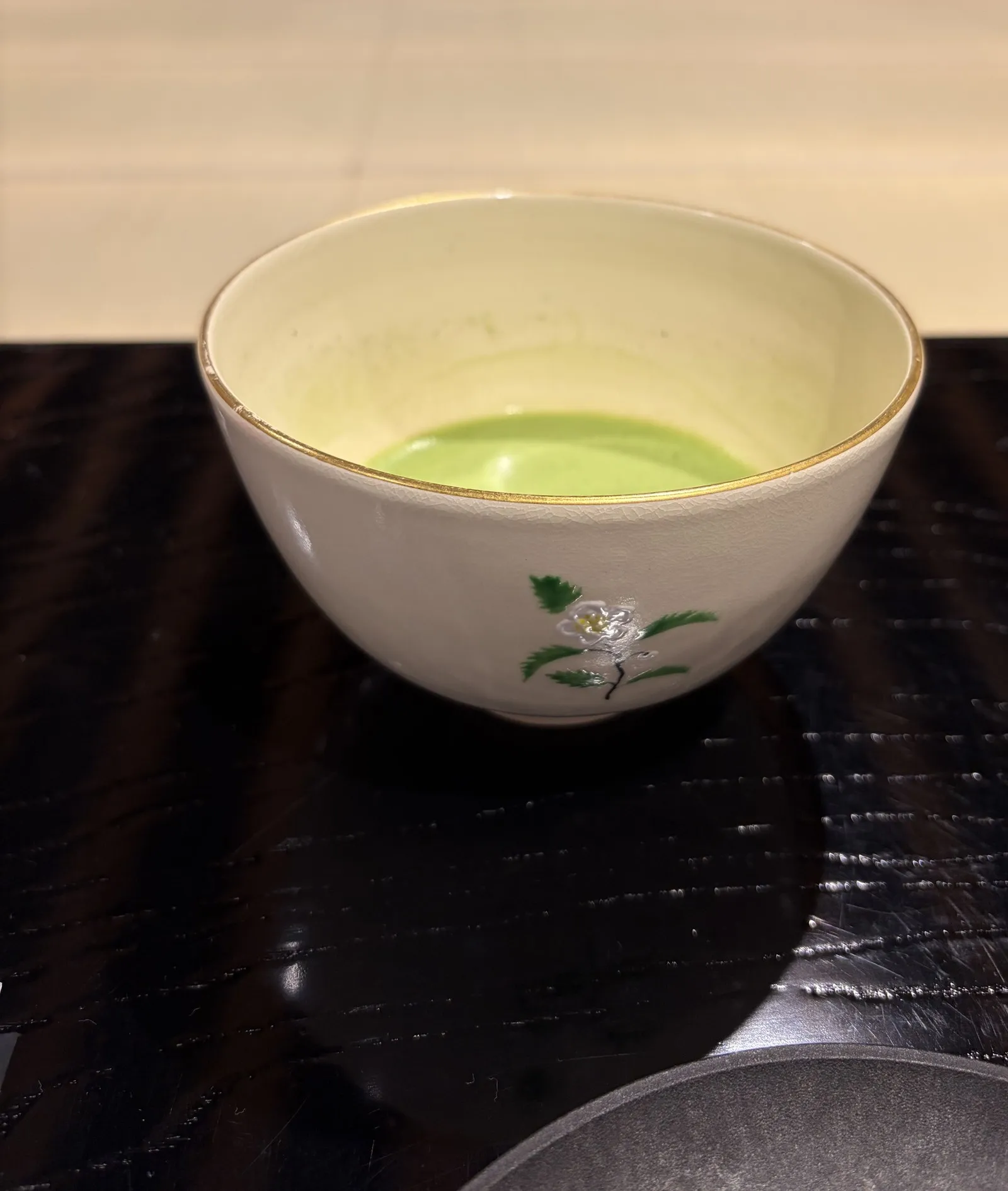
Usucha (thin tea) is what almost every tourist-facing tea ceremony serves. It's whisked with about half the matcha and roughly double the water of koicha, producing a light, frothy bowl. This is the version most people picture when they think "matcha."
Koicha (thick tea) uses roughly double the matcha per volume of water and is kneaded rather than whisked, producing a thick, glossy, almost syrupy tea with no foam. Koicha requires a noticeably higher grade of matcha — the bitterness and coarseness of a lesser tea has nowhere to hide at that concentration — and is traditionally reserved for more formal gatherings, shared from a single bowl among a small group. Most first-time visitors on a standard Tokyo tourist booking will never be served koicha; it tends to appear in longer or more advanced sessions.
In practice, this means the honest answer to "what grade am I drinking" at most Tokyo tea ceremony experiences is: a solid, food-service-quality ceremonial matcha suited to usucha — good enough to taste correct and not bitter, but rarely the top-tier leaf a tea professional would reserve for koicha or for their own daily practice.
How to actually judge what's in your bowl, as a guest
You don't need to be a tea professional to read the signals:
- Color. A vivid, slightly saturated jade green suggests careful shading and fresh grinding. Dull olive or yellowish tones usually mean an older or lower-grade tea, or one that's been stored too long.
- Foam. A well-whisked usucha should have a fine, stable foam that doesn't collapse the moment it's set down. Foam that vanishes quickly can be technique, but it's often also the tea.
- Taste. Good matcha reads as a balance of a gentle sweetness and umami up front, with bitterness arriving late and softly, not sharply, on the first sip. If the first thing you taste is bitterness, that's usually the grade talking, not you.
- Grit. Properly stone-ground matcha should feel smooth on the tongue, almost velvety. A gritty or sandy texture usually points to fast machine-grinding rather than a quality problem with the leaf itself.
Why this rarely shows up on a booking page
None of the 20 experiences tracked in our Tokyo Tea Ceremony Price Index currently states a matcha grade or brand on its listing page. That's not unusual — grade disclosure simply isn't part of how these experiences are marketed. If it matters to you, it's a reasonable thing to ask about directly, the same way we'd suggest asking about a host's training in 10 questions to ask before you book.
Frequently Asked Questions
- Is ceremonial-grade matcha always better than culinary-grade matcha?
- Usually, but not always — "ceremonial grade" isn't a regulated term, so quality varies by producer. A well-made culinary matcha from a careful producer can outperform a poorly stored or mislabeled tin sold as ceremonial grade. Color, freshness, and grinding matter as much as the label.
- Can I drink ceremonial-grade matcha in a latte?
- Yes — there's no rule against it, only convention. Culinary grade is recommended for lattes mainly because it's cheaper and its stronger flavor holds up against milk and sweeteners, not because ceremonial grade would taste bad. Using ceremonial grade in a latte is simply a more expensive way to get a smoother-tasting drink.
- Will I be told what grade of matcha I'm drinking at a Tokyo tea ceremony?
- Rarely, unless you ask. Grade and brand disclosure isn't standard on tourist-facing booking pages or during the experience itself.
- What's the difference between matcha and the powdered green tea used in smoothies or ice cream?
- In practice, the powdered green tea used in many food and drink products is often a lower, culinary-grade matcha or, at the cheaper end, a green tea powder that isn't matcha at all — matcha specifically comes from shade-grown tea leaves (tencha) stone-ground into powder, and not every "green tea powder" on the market meets that definition.