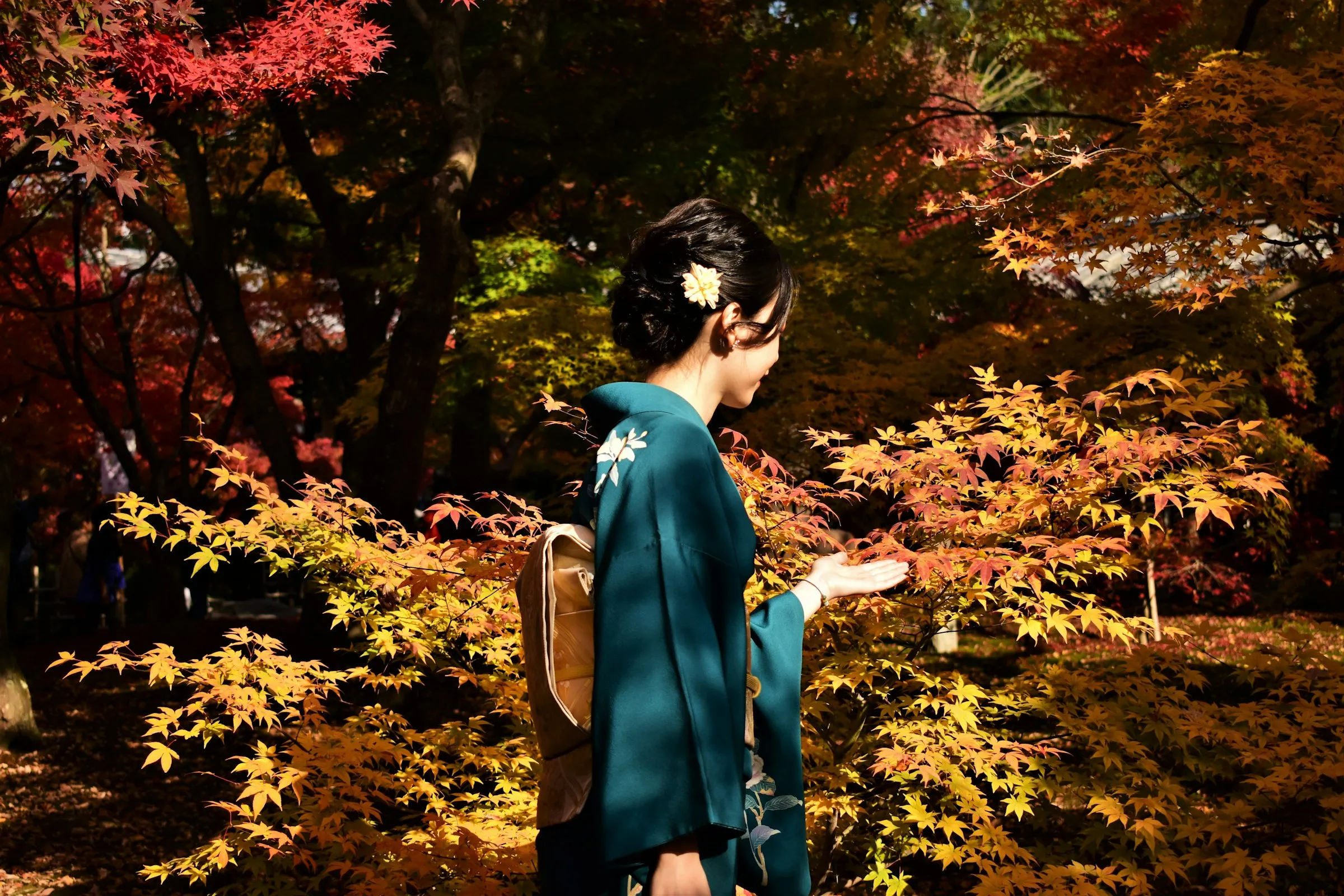
Kimono for Autumn: What to Wear for Koyo Season in Tokyo
Some links are affiliate links — we may earn a small commission at no extra cost to you.
Quick answer
In Tokyo, autumn leaves usually peak from late November into early December, and by then a rental kimono should be the lined kind (awase). Autumn colors and motifs like maple, ginkgo and chrysanthemum are all in season, but for photos among red leaves, a kimono in navy, cream or deep green stands out better than a red one. Days are mild but evenings get cold, so wear a thin thermal with a wide neck underneath and ask for a shawl or haori. Plan your photos for late morning to early afternoon: the sun sets around 4:30 pm.
Why autumn is a different kimono day
Autumn is my favorite season to wear kimono. The heat has gone, and a lined kimono finally feels comfortable instead of heavy. It's also the season when a few choices that don't matter in spring suddenly do: how warm you'll be at 4 pm, what your kimono looks like against a wall of red leaves, and how slippery a path of wet ginkgo leaves is in zori.
This guide covers only what changes in autumn. For how to choose a rental shop and what it should cost, see our wearer's guide to kimono rental in Tokyo. For what to check at the counter and before you leave the shop, use the kimono rental checklist.
When koyo season actually is in Tokyo
Autumn color arrives later in central Tokyo than many visitors expect. Ginkgo trees usually turn yellow from mid to late November, and maples tend to peak from late November into early December. Kamakura is usually a little later again. Exact timing changes every year with the weather, so check a current foliage forecast the week before you go.
That timing matters for kimono because it's also when rental shops are busiest. Weekends in late November fill up, so book a few days ahead if you have a fixed date.
Lined or unlined: which kimono you'll get
Traditionally, the lined kimono (awase) is worn from October through May, and the unlined one (hitoe) in June and September. By the time the leaves turn in Tokyo, you're well inside awase season, and any good rental shop will have switched over.
The exception is early October. Warm days are still common, and some shops keep a few unlined kimono in stock for them. If you're visiting in the first half of October and the forecast is warm, ask which they recommend. From November, awase is the right choice, and it's warmer too.
Colors and motifs for autumn
Autumn kimono tend toward deeper colors: rust, mustard, deep red, plum, moss green, brown. Common autumn motifs include:
- Maple leaves (momiji)
- Ginkgo leaves (icho)
- Chrysanthemums (kiku)
- Autumn grasses and flowers (aki no nanakusa), such as bush clover and pampas grass
There's an old idea in kimono that you wear a seasonal motif slightly ahead of the season, and move on once the real thing is at its peak. Some wearers stop wearing maple leaves once the trees are bare, for example. On a rental day no one will judge you for any of this. It's just nice to know why the shop might suggest chrysanthemums instead of maples in early December.
One practical tip for photos: a red kimono in front of red maples tends to disappear. If the photos matter to you, choose a color that contrasts with the leaves. Navy, cream, deep green and grey all stand out well against red and yellow. Then bring the autumn colors in through the obi.
Staying warm
Tokyo in November is usually mild in the middle of the day, around 15–18°C (59–64°F), but mornings are cold, often below 10°C (50°F), and it cools quickly again after 3 pm. Early December is colder still. If you take an early dressing slot (which I recommend below), you'll be walking to the shop and taking your first photos at the coldest time of day. A lined kimono plus the obi is warmer than it looks around the middle of your body. The cold reaches you through the neck, the wrists and the feet.
- A thin thermal underneath. Wear a thin thermal top with a wide, deep neck so it doesn't show at the collar. Choose one with sleeves that end above the elbow, so they don't peek out of the kimono sleeves.
- Thermal leggings. They're invisible under the kimono and make a real difference in the late afternoon.
- A shawl or haori. Many shops lend a shawl, and some rent a haori (a short jacket worn over the kimono). Ask whether it's included or extra. A haori is also nice in photos.
- Warm tabi. Ask whether the shop has lined or thicker tabi socks. Stone paths in gardens get cold.
- Disposable hand warmers (kairo). Convenience stores sell them everywhere. Keep one in your bag or sleeve, not against your skin.
Watch your step on fallen leaves
Fallen leaves look lovely and are slippery in zori, especially after rain. Ginkgo leaves are the worst, and in places with many female ginkgo trees, the fallen nuts are squashed into the path and smell strongly. Walk around both, and lift the front of your hem slightly on wet paths so it doesn't pick up mud.
If rain is forecast, ask the shop about its rain policy when you book (the checklist covers this).
Plan your day around the light
The sun sets around 4:30 pm in late November. The light is warmest from late morning to early afternoon, and gardens start to feel dark well before closing time. So:
- Book an early dressing time so you're out by about 10 am.
- Take your photos first, and leave cafés and shopping for later.
- Check the return time against any evening plans. Some gardens hold evening light-ups in autumn. If you want to go to one in kimono, check whether the shop has a late or next-day return option before you book.
Where to wear it
A few places in and near Tokyo that work well in kimono in autumn:
- Rikugien in Komagome: a classic Edo-period strolling garden with maples around the pond.
- The ginkgo avenue at Meiji Jingu Gaien: a long, straight avenue of yellow ginkgo. It's very crowded on weekends, so go early.
- Koishikawa Korakuen: another Edo-period garden, close to central Tokyo.
- Kamakura: temples and hills, with color that usually comes a little later than in Tokyo. See Asakusa vs Ginza vs Kamakura for how a Kamakura kimono day compares.
If you're wearing it to a tea ceremony
November is a special month in the tea room. It's when the sunken hearth (ro) is opened for the cold season, and practitioners often call it the new year of tea. The sweets and the flowers change with it. Our guide to the tea ceremony through the seasons explains what you'll see. For kneeling in kimono and what to wear to a tea ceremony in general, see what to wear to a tea ceremony in Tokyo. Some experiences in our Price Index include a kimono option, so you're dressed on site.
The short version
- Timing: ginkgo from mid to late November, maples from late November into early December.
- Fabric: lined (awase) from November. Ask about unlined only for warm days in early October.
- Color: for photos, choose a kimono that contrasts with the leaves, and bring autumn colors in through the obi.
- Warmth: a wide-necked thermal, leggings, warm tabi, and a shawl or haori for the cold morning and after 3 pm.
- Footing: walk around wet leaves and ginkgo nuts.
- Light: dress early and take photos before 2 pm. The sun sets around 4:30.
Frequently Asked Questions
- Is it too cold to wear kimono in Tokyo in November?
- No. November is one of the most comfortable months for kimono. A lined kimono with the obi is warm around the body, and a thin thermal underneath plus a shawl for the cold morning and late afternoon is usually enough. Early December is colder, so add leggings and warmer tabi.
- Do I need a haori or a coat?
- Not during the middle of the day in November, but it helps in the morning, after 3 pm and on windy days. Many rental shops lend a shawl, and some rent haori jackets. Ask when you book whether it's included.
- What color kimono should I wear for autumn photos?
- Any autumn color works, but against red maples a red kimono tends to blend in. Navy, cream, deep green or grey stand out better. You can bring autumn colors in through the obi.
- When should I book a kimono rental for koyo season?
- Book a few days ahead for weekends in late November, which are the busiest days. Weekday mornings are the easiest to get, and the quietest for photos too.